
Tanning
Vegetable Extracts
Natural is fashion
Among the various types of tanning, vegetable tanning is still today the most classic, traditional and recognizable — the only one capable of giving leather unmistakable properties. It is the closest to nature, the most environmentally respectful, and the most suited to combining comfort and aesthetics, fashion and tradition, versatility of use and uniqueness of the product.
Natural is the feel that vegetable extracts give to leather; natural is the typical scent of leathers made by skilled artisans blending the best extracts with selected oils and fatliquors; natural is the way wallets, briefcases, boots and belts are used by their owners.
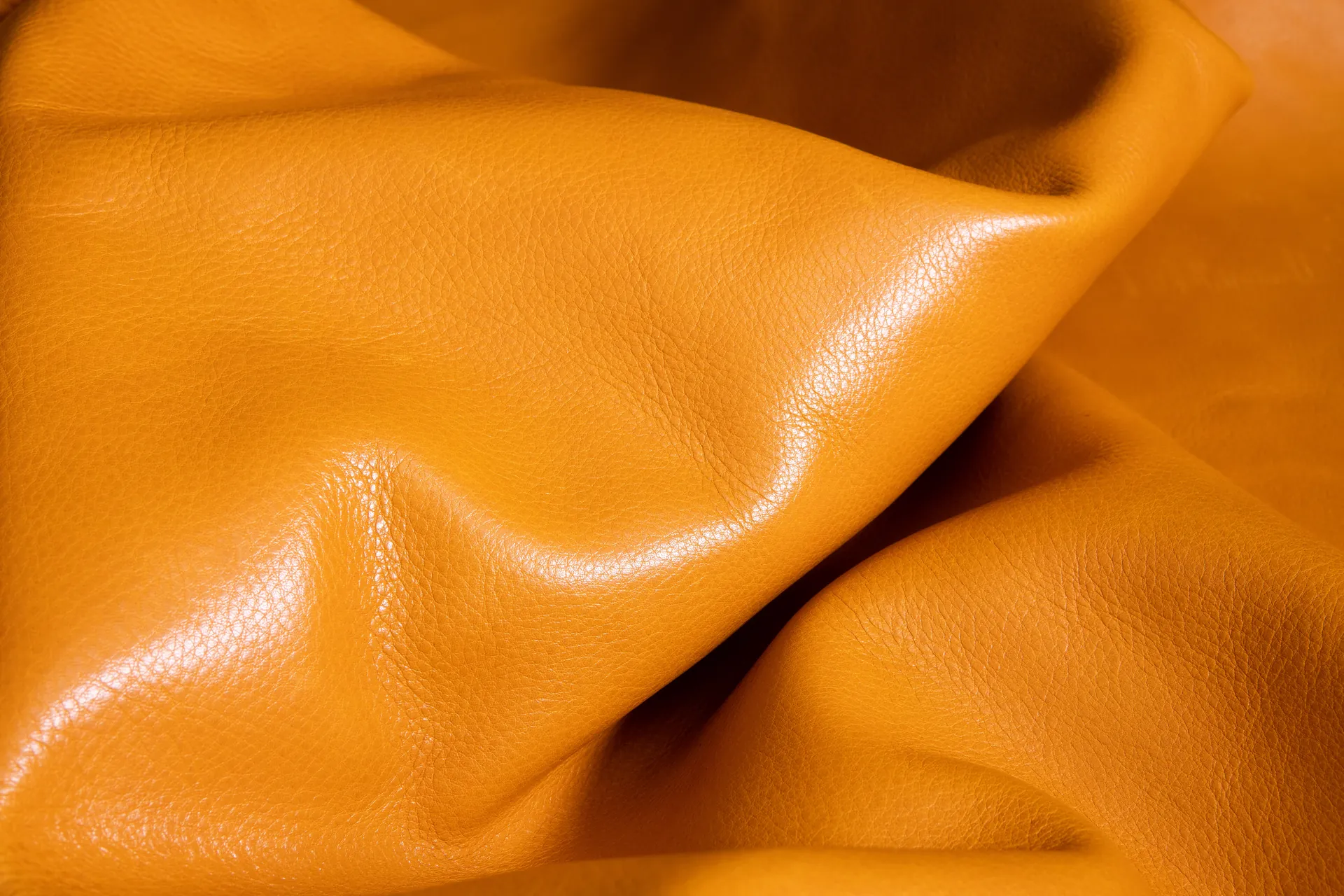
Vegetable-tanned leathers absorb the marks of life. When new, they are bright and warm-toned. They age but do not spoil — the changes and personalization from use and time bear witness to the nature of the product. Over time, the tannins lend warm tones that resurface with use, personalizing the leather in a unique, unrepeatable way, just as our own skin does.
The term “tannin” was first used in 1796 to describe a substance in vegetable extracts able to form insoluble complexes with the proteins of animal hide, preventing proteolytic enzymes from compromising its physical condition. This substance is found in many trees and plants — in the bark, leaves, wood, fruits and roots — and gives leather its unmistakable character.
In today's tanning practice, liquid or powder tannic extracts are used. The best known and oldest is chestnut extract, obtained from the trunk of the chestnut tree. Equally widespread in vegetable tanning is quebracho extract, from a tree that grows mainly in Argentina; its wood yields a characteristic red powder that gives leather a warm, brilliant tone.
Besides chestnut and quebracho, tara tannins are used — mainly in car and furniture upholstery — while myrobalan extracts give leather a uniform, soft color.
13 products
| Product name | Description | Physical state | Tannin content (%)* | Moisture (%) | pH (6.9°Bé) |
|---|---|---|---|---|---|
| Castaño N | “Astringent” chestnut extract | Powder / Liquid | 76 ± 1,0 | Max 8 | 3,5 ± 0,3 |
| Castaño N2 | “Astringent” chestnut extract | Powder | — | — | — |
| Dulcotan RN | “Sweetened” chestnut extract | Powder | 72 ± 1,0 | Max 8 | 4,5 ± 0,2 |
| Dulcotan Special | “Sweetened” chestnut extract | Powder | — | — | — |
| Indusol ATO | Ordinary cold-soluble quebracho extract | Powder | 72 ± 1,5 | Max 8 | 4.7 ± 0.3 |
| Indusol ATG | Yellowish cold-soluble quebracho extract | Powder | 72 ± 1,5 | Max 8 | 4,6 ± 0,3 |
| Indusol ATS | Semi-soluble quebracho extract | Powder | 72 ± 1,5 | Max 8 | 4,6 ± 0,3 |
| Indusol ATD | Semi-soluble, decolourised quebracho extract | Powder | 72 ± 1,5 | Max 8 | 4,4 ± 0,3 |
| Ormotan T | Tara tannin | Powder | Min 48 | Max 13 | 3,4 ± 0,4 |
| Tara Extra Liquida | Tara tannin | Liquid | Min 27 | Max 60 | 4,0 ± 0,3 |
| Gambier CM | Gambier extract | Powder | Min 50 | Max 12 | 4,6 + 0,3 |
| Gambier Liq. Dep. | Gambier extract | Liquid | Min 28 | Max 65 | 3,8 ± 0,3 |
| Mirabolano | Myrobalan extract | Powder | Min 70 | Max 8 | 3,4 ± 0,3 |
* Tannin content is measured using the Filter method.
Technical support